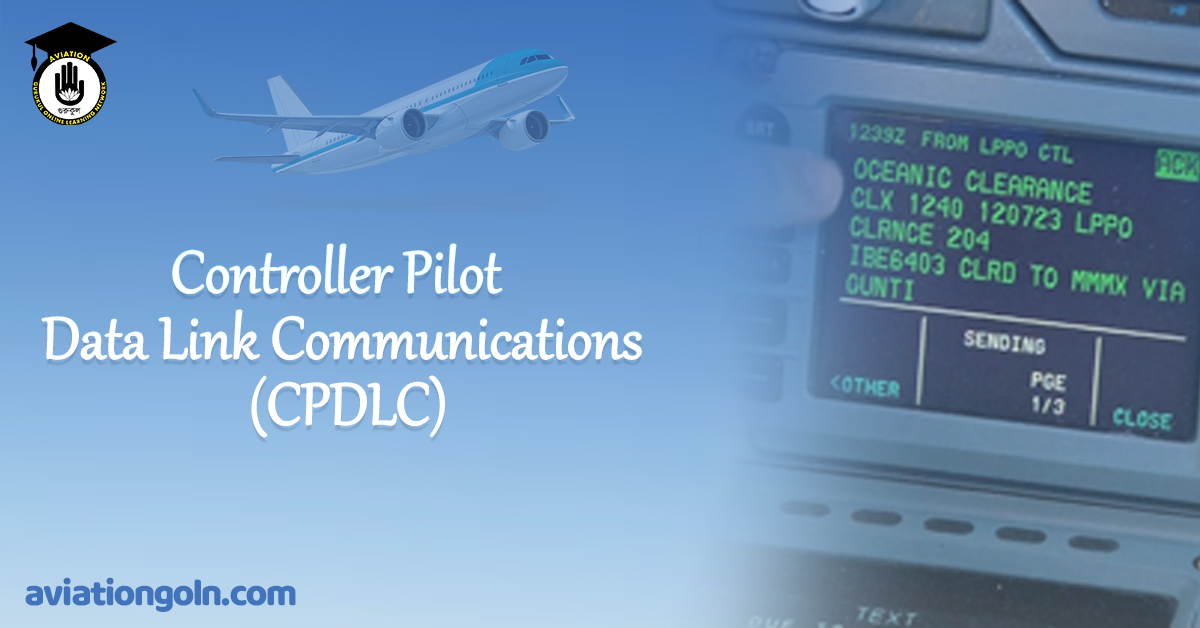
In modern aviation, effective communication between pilots and air traffic controllers is fundamental to maintaining safety, efficiency, and situational awareness. Traditionally, this communication has relied heavily on voice radio transmissions, which can be prone to congestion, miscommunication, and call sign confusion in busy airspaces. To address these limitations, the aviation industry has increasingly adopted Controller Pilot Data Link Communications (CPDLC)—a digital communication system that allows controllers and pilots to exchange structured messages via data link instead of voice.
This article provides a comprehensive overview of CPDLC, explaining its definition, core principles, operational framework, and message structure. It also outlines the various Data Link Services (DLS) that enable communication management and ATC clearances, as well as the regulatory framework governing CPDLC implementation within the Single European Sky. In addition, the article discusses the expected safety and efficiency benefits, operational procedures, and relevant phraseology used in CPDLC communications.
The objective is to offer readers a clear understanding of how CPDLC functions, its operational challenges, and the safety considerations essential for its successful integration into global air traffic management systems.
Controller Pilot Data Link Communications (CPDLC)
This article gives an overview of Controller Pilot Data Link Communications (CPDLC). It describes the main principles, the different data link services, and the basics of CP-DLC operations, including related phraseology.
The goal is to provide background information for understanding the safety issues related to this technology.
Definition
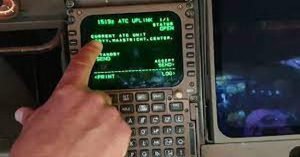
Controller Pilot Data Link Communications (CPDLC) is a means of communication between air traffic controllers and pilots using data link for Air Traffic Control (ATC) communications.
(ICAO Doc 4444: PANS-ATM)
Description
CPDLC is a two-way data-link communication system that allows controllers to transmit non-urgent, strategic messages to an aircraft as an alternative to traditional voice communication. These messages are displayed on a flight deck visual display for the pilot’s acknowledgment or response.
The CPDLC application provides air-ground data communication for ATC services, enabling several Data Link Services (DLS) that facilitate the exchange of:
Communication management messages,
Clearance/information/request messages,
Other communications corresponding to traditional ATC voice phraseology.
Controller Functions
Controllers can:
Issue ATC clearances (level assignments, lateral deviations/vectoring, speed assignments, etc.),
Assign radio frequencies, and
Send various requests for information.
Pilot Functions
Pilots can:
Respond to controller messages,
Request and receive clearances or information, and
Report operational information.
Additionally, a “free text” capability allows exchange of information outside the defined message formats when necessary.
CPDLC is currently undergoing global implementation, with varying stages of deployment across regions.
The global communication procedures are defined in:
ICAO Annex 10, Volume III, Part 1, Chapter 3, and
The CPDLC message set is detailed in ICAO Doc 4444: PANS-ATM, Annex 5.
In European airspace, the implementation of CPDLC for aircraft operating above FL285 and for Air Navigation Service Providers (ANSPs) is regulated by the Data Link Services Implementing Rule (DLS-IR).
Data Link Services Implementing Rule
The Data Link Services Implementing Rule (DLS-IR) was adopted on 16 January 2009 by the European Commission and published as Regulation (EC) No. 29/2009 – Data Link Services for the Single European Sky (SES).
The DLS-IR is legally binding and applies directly to both:
Air Navigation Service Providers (ANSPs), and
Aircraft Operators.
Technical Issues and Provider Aborts (PAs)
During implementation, several ANSPs and operators reported technical issues, particularly “Provider Aborts (PAs)”—unexpected disconnections in the air-ground data communications that enable data link services.
These disconnections exceeded acceptable performance levels and posed potential safety risks.
To mitigate these impacts, some ANSPs introduced “white lists” restricting DLS operations to aircraft equipped with specific, proven-compatible avionics systems.
EASA Investigation
At the request of the European Commission, the European Aviation Safety Agency (EASA) conducted an investigation to:
Identify the root causes of these technical issues, and
Recommend corrective measures.
EASA’s findings revealed that:
The random PA occurrences were due to multiple contributing factors, including the radio frequency environment and the single-frequency implementation of the data link network.
These issues led to degraded network performance, increasing controller and pilot workload and reducing situational awareness—thus creating potential aviation safety risks.
EASA Recommendations
EASA concluded that acceptable data link performance could only be achieved by:
Deploying a multi-frequency infrastructure, and
Optimizing the network to prevent radio frequency interference.
It further recommended:
Developing and implementing an action plan to address these issues,
Validating technical solutions before full operational deployment.
However, as these measures required time, EASA advised postponing the application date of Regulation (EC) No. 29/2009.
Deferred Implementation
Due to these technical challenges and safety concerns, and to allow sufficient time for remediation and validation, the application date of Regulation (EC) No. 29/2009 was deferred to 5 February 2018, as stated in Regulation (EU) No. 310/2015, which amended the original rule on Data Link Services for the Single European Sky.

Data Link Services
The Controller Pilot Data Link Communications (CPDLC) system supports several standardized Data Link Services (DLS), each designed to facilitate specific aspects of communication between pilots and Air Traffic Service Units (ATSUs). These services enhance communication efficiency, reduce frequency congestion, and improve situational awareness.
- Data Link Initiation Capability (DLIC)
This service provides the essential setup information required to establish data link communication between an ATSU and an aircraft.
- The DLIC service is executed before the first use of any other data link application.
- It ensures a proper and secure link initialization between the aircraft and the ground system.
- ATC Communications Management Service (ACM)
This service provides automated assistance to flight crews and controllers for the transfer of ATC communications, both voice and CPDLC.
- It simplifies the process of changing radio frequencies and maintaining continuous communication during handovers between control sectors.
- ACM reduces the chances of communication errors and frequency congestion.
- ATC Clearances Service (ACL)
The ACL service allows operational exchanges between flight crews and controllers through data link messages.
- Flight crews can send requests and reports, while controllers can issue clearances, instructions, and notifications.
- This function mirrors standard ATC voice phraseology, improving clarity and reducing misunderstandings.
- ATC Microphone Check Service (AMC)
This service enables controllers to verify that voice communication equipment is functioning properly.
- Controllers can send a simultaneous instruction to all CPDLC-capable aircraft on a given frequency to confirm that no transmission is blocking a voice channel.
- It helps maintain communication integrity and prevents interference.
- Departure Clearance (DCL)
The DCL service provides automated assistance for requesting and delivering departure clearances to aircraft.
- This automation streamlines the pre-flight clearance process, saving time and reducing radio traffic at busy airports.
- Downstream Clearance Service (DSC)
The DSC service is designed for flight crews needing to request and obtain clearances from ATS units not yet in control of the aircraft.
- It allows pilots to communicate directly with upcoming control sectors when coordination through the current ATS unit is not possible.
- This ensures smoother transitions between control zones and minimizes delays in clearance delivery.
Mandated Services under DLS-IR
According to the Data Link Services Implementing Rule (DLS-IR), the implementation of the following four core services is mandatory:
- DLIC – Data Link Initiation Capability
- ACM – ATC Communications Management
- ACL – ATC Clearances
- AMC – ATC Microphone Check
These four services form the foundation of operational CPDLC communications and are essential for compliance within the Single European Sky (SES) framework.

Expected Benefits of CPDLC
- Less communication on the ATC frequency;
- Increased sector capacities;
- More pilot requests can be dealt with simultaneously;
- Reduced probability of miscommunication (e.g. due to call sign confusion);
- Safer frequency changes, hence fewer loss of communication events.
Main Principles of CPDLC Exchange
The following underlying principles apply to the use of CPDLC:
Voice and data links shall co-exist as a means of ATS communication.
Implementation of CPDLC is intended as a supplementary means of communication to the use of voice communication.CPDLC shall only be used for non-time-critical communications.
Time-criticality is determined by:ATC traffic situation,
end-to-end system and response performance (controller and pilot),
and recovery time.
While a voice response is usually expected within seconds, CPDLC messages may experience latency of up to several minutes.
Choice of communication mode (voice or CPDLC) shall remain at the discretion of the controller and/or pilot involved.
Control unit authority must comply with ICAO Annex 11, Chapter 3, paragraph 3.5.1:
“A controlled flight shall be under the control of only one air traffic control unit at any given time.”

CPDLC Operations
Flight Planning
Operators of CPDLC-capable aircraft shall:
Insert the letter J and a corresponding number (1 for ATN VDL Mode 2, 2–7 for different FANS implementations) in Item 10 of the ICAO flight plan form.
Insert COM/CPDLC in Item 18.
More than one code can be inserted depending on the aircraft equipment.
Example: J1J2 means the aircraft is equipped with both ATN VDL Mode 2 and FANS 1/A HFDL.

Transfer of CPDLC
Transfer from non-CPDLC to CPDLC-equipped ATS unit:
The aircraft uses DLIC to log on to the CPDLC-equipped unit.
Procedures and timings are published in the respective AIP.
Transfer between two CPDLC-equipped ATS units:
The transfer of voice communications and CPDLC occurs concurrently.
The transferring unit (Current Data Authority — CDA) designates the receiving unit as the Next Data Authority (NDA).
This designation minimizes the risk of logging on to an incorrect data authority (analogous to tuning the wrong radio frequency).
Transfer from CPDLC-equipped to non-CPDLC ATS unit:
CPDLC termination commences concurrently with the transfer of voice communications.

Use of CPDLC
The extent to which CPDLC replaces voice communication depends on local implementation.
Although capable of complex exchanges, the most commonly used messages include:
- Change of SSR code;
- Transfer of control and communication;
- ATC clearances (e.g., level changes, vectoring, direct routing, speed control) that are not time-critical;
- Responses to aircraft CPDLC requests.
CPDLC Message Composition
- Messages follow a standard format, written in plain language, abbreviations, or codes, as prescribed in ICAO Annex 10, paragraph 3.7.
- Plain language should be avoided when suitable abbreviations or codes are available.
- Nonessential words or politeness expressions must not be used.
- Mandatory and optional uplink (ground-to-air) and downlink (air-to-ground) messages have been defined for each data link service.
Note: Systems may support different message sets. Proper handling of unsupported messages (e.g., via error responses) is crucial for CPDLC reliability.
Message Structure
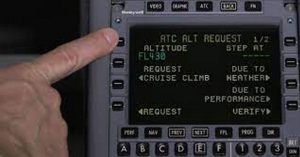
CPDLC messages can be single-element or multi-element.
According to ICAO ATN SARPs and EUROCAE Document ED-110B, a message can include up to 7 elements.
Systems compliant with the EUROCONTROL Specification should limit downlink messages to 2 elements maximum.
Examples:
Single-element message:
CLIMB TO [level]Multi-element message:
CLIMB TO [level], CLIMB AT [vertical rate] MINIMUM
A single-element response applies to all elements in a multi-element message.
If any part cannot be complied with, the pilot must respond “UNABLE”, which applies to the entire message.
Therefore, multi-element messages should be avoided unless all instructions must be executed together (i.e., dependent clearances).
Dialogue Management
Only one open dialogue of the same type with the same aircraft is permitted at any given time.
The possible types of dialogues are:
Horizontal profile
Vertical profile
Speed
SSR code
Examples:
✅ Possible: Open dialogues for a speed restriction and a level change simultaneously.
❌ Not possible: Open dialogues for a heading and a direct route at the same time.