
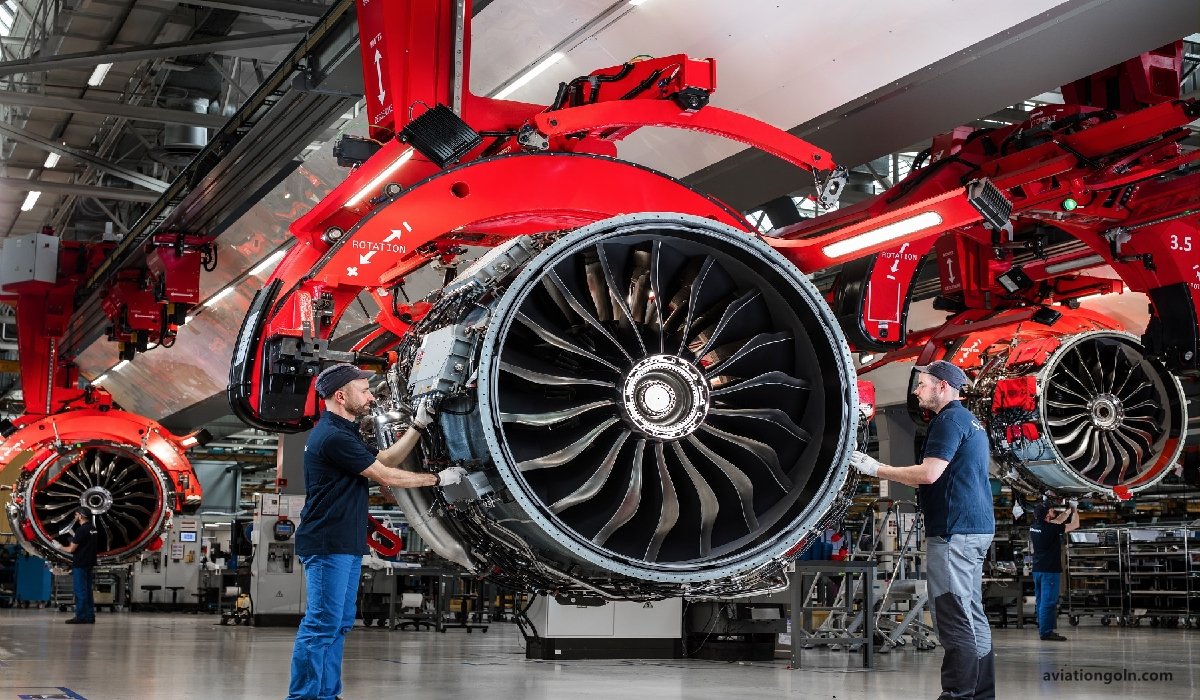
Introduction to Aircraft Engines: Aircraft engines are marvels of engineering that have undergone significant evolution since the inception of aviation. These engines serve the critical function of propelling the aircraft, allowing it to achieve flight. This article delves into the intricate world of aircraft engines, discussing their types, working principles, components, history, and more.
Introduction to Aircraft Engines
A Brief History
The history of aircraft engines parallels the history of aviation itself. The Wright brothers’ first successful flight in 1903 was powered by a 12-horsepower internal combustion engine. This engine was crude and simple compared to modern standards, but it was the spark that ignited the aviation revolution.
Over the 20th century, aviation technology progressed rapidly. The two World Wars provided significant impetus to the development of more powerful and reliable engines. The jet age, which began in the 1940s with the introduction of the turbojet engine, transformed the industry, enabling aircraft to travel faster and more efficiently.
Components of an Aircraft Engine
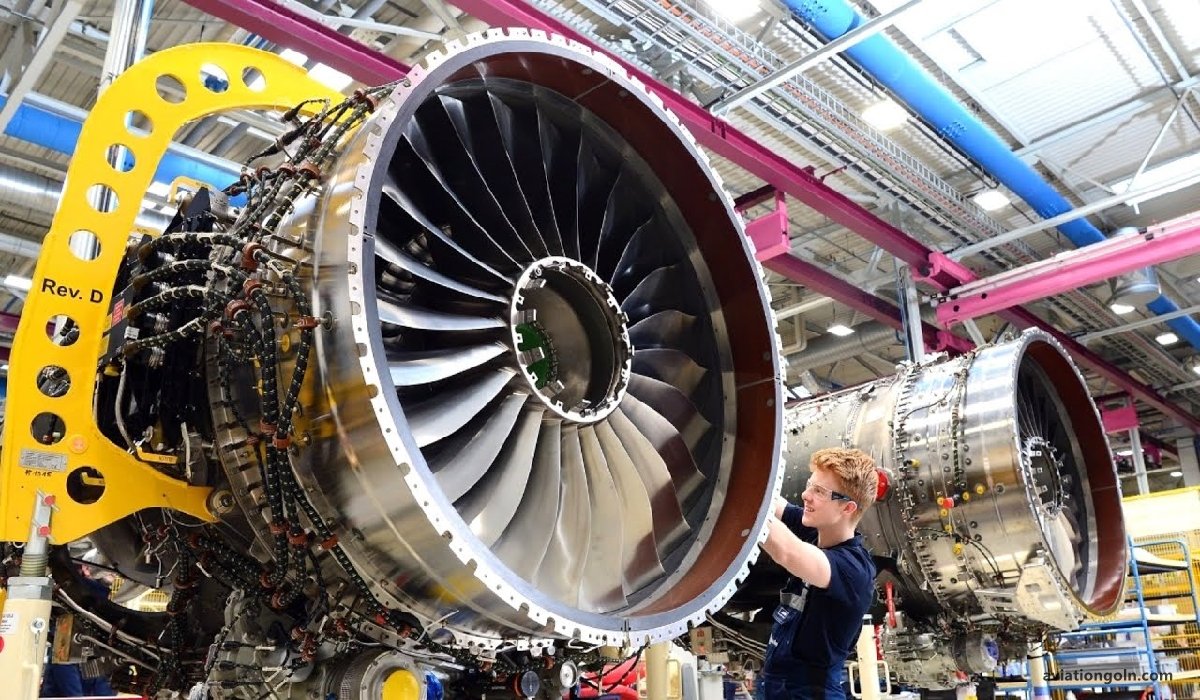
To understand aircraft engines, it’s crucial to be familiar with their main components:
- Combustor: Where the air-fuel mixture is burned to produce high-pressure, high-velocity gases.
- Turbine: Captures energy from the high-pressure gases leaving the combustor. This energy is used to drive the compressor and the fan.
- Compressor: Compresses the incoming air before it enters the combustor.
- Fan: In turbofan engines, the fan helps generate additional thrust by bypassing some air around the engine’s core.
- Nozzle: Expels the exhaust gases at high velocity to produce thrust.

Different Types of Aircraft Engines
1. Piston Engines
Piston engines, also known as reciprocating engines, were among the first engines used in aviation. These are internal combustion engines where burning fuel-air mixture in the cylinders pushes the pistons, which in turn rotate the crankshaft and ultimately drive the propeller. They are typically found in smaller aircraft.
2. Turboprop Engines
Turboprop engines are a hybrid between piston and jet engines. They utilize a gas turbine core to generate power, which then drives a propeller. This type of engine offers more power than a piston engine and is more efficient at lower speeds and altitudes, making them suitable for regional and short-haul flights.

3. Turbojet Engines
The turbojet is the most straightforward type of jet engine. Air is sucked in, compressed, mixed with fuel, and then ignited. The expanding gases are expelled out the back, propelling the aircraft forward. Turbojets are high-speed engines, often found in older military and some civilian aircraft.
4. Turbofan Engines
The majority of modern commercial aircraft use turbofan engines. These are essentially turbojets with an added fan at the front. This fan increases efficiency by bypassing some of the air around the engine’s core, providing additional thrust. The proportion of air that bypasses the engine core versus the air that goes through the core determines the engine’s bypass ratio. High bypass ratios are common in commercial aviation due to their increased fuel efficiency.
5. Ramjet and Scramjet Engines
Ramjets and scramjets are air-breathing engines that have no moving parts. They rely on the aircraft’s high speed to compress the incoming air. While ramjets operate at supersonic speeds, scramjets are designed for hypersonic speeds. Both are mainly researched for military applications and space launches.

How Aircraft Engines Work
The fundamental principle behind all aircraft engines is Newton’s third law of motion: for every action, there is an equal and opposite reaction. By expelling gas backwards at high speed, the engine propels the aircraft forward.
For example, in a turbojet:
- Intake: Air enters the engine.
- Compression: The compressor compresses the air, increasing its pressure.
- Combustion: The compressed air is mixed with fuel in the combustor and ignited. This dramatically increases the temperature and pressure of the gas.
- Exhaust: The high-pressure gases are expelled through the turbine and nozzle, producing thrust.

Challenges and Advancements
Aircraft engines face numerous challenges, with efficiency, noise, and emissions at the forefront. The aviation industry contributes to global CO2 emissions, and there is an ongoing push to reduce this impact. Noise pollution is another concern, especially for communities near airports.
Technological advancements aim to address these challenges. For instance, geared turbofans, which use a gearbox to allow the fan and the turbine to spin at optimal speeds, promise better fuel efficiency and reduced noise. Electric and hybrid propulsion systems are also under development, with the potential to revolutionize the industry.

From the early days of the Wright brothers’ rudimentary engine to the modern turbofan engines that power large commercial airliners, aircraft engines have continually evolved. Understanding their intricacies offers insights not only into the marvel of human flight but also into the challenges and responsibilities the aviation industry holds in our interconnected world. The future of aviation will undoubtedly bring further advancements, ensuring safer, more efficient, and environmentally friendly travel for all.